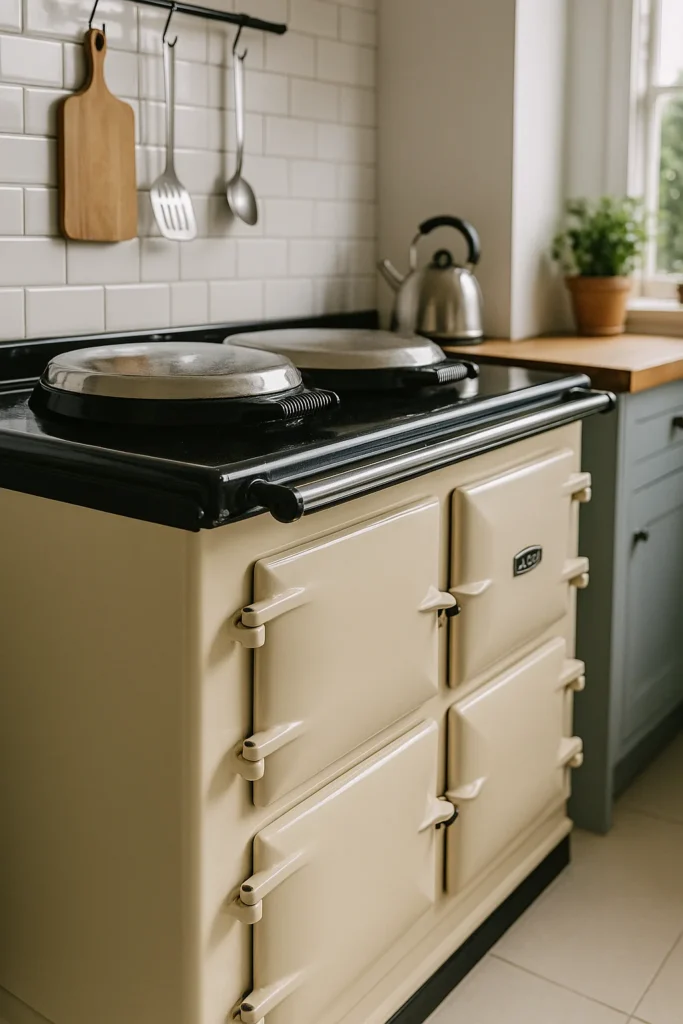
The AGA has been around since 1922 when Swedish physicist Dr. Gustaf Dalén invented it, and if you’ve got one you’ll know they’re built to last a lifetime. That also means they can go a very long time between proper cleans — I’ve tackled AGAs that haven’t been touched in 30 years with grease baked on 4mm thick. Here’s exactly how I clean them professionally, start to finish.
The Night Before
Make sure the AGA has been switched off the night before you clean it. You cannot clean a hot AGA and you need it completely cold before you start. This is non-negotiable.
A Word of Warning Before You Start
Do not use caustic-based cleaners on an AGA, Rayburn, Esse or any similar range cooker. I know it’s tempting — they’re powerful and they work fast — but caustic cleaners dull the enamel and leave a white bloom that will not come off. Ever. I clean AGAs regularly where a well-meaning housekeeper has sprayed Mr Muscle on the enamel and you can see exactly where it’s been — permanently. Always check the label for Sodium Hydroxide — if it’s in there, put it back on the shelf.
For everything in this guide I use Dirtbusters Bio Oven Cleaner — non-caustic, fume-free and safe on AGA enamel.
Step 1 — Prepare Your Area
Lay out a soft surface next to the AGA before you start — an old blanket or a table protector works perfectly. The AGA doors are heavy and you need somewhere safe to rest them.
Step 2 — Remove Shelves and Doors
Take out all the shelves from the ovens. If appropriate — most commonly on oil-fired AGAs which are the most common type I clean in Norfolk — remove the circular rings from around the hotplates. Electric AGAs don’t have these. Carefully remove the doors and place them on your prepared soft surface.
I don’t remove the inner door covers unless they’re heavily soiled — if they need it, spray them with Dirtbusters Bio Cleaner and leave them to dwell while you work on the rest of the AGA.
Step 3 — Spring Handles and Soaking
Remove the spring handles from the doors and drop them into warm soapy water to soak. The grease and muck softens off easily given enough dwell time.
Step 4 — The Hotplate Top and Lids
Spray the top of the AGA and the lids with the bio cleaner and leave it to dwell. You can use a scraper blade on the top of the AGA — take it steady, keep the blade flat to the surface, and don’t twist it while you’re moving. The bio spray will have softened the grease and most of it will come away cleanly.
For seriously neglected AGAs the baked-on grease can be extraordinary — I’ve seen it 4mm thick and rock solid. Keep the blade flat, work steadily, and it will come off. Veteran AGA owners will know that scratches, worn enamel and the odd battle scar are all part of the charm of an old AGA — they wear their history.
For the inside of the lids, a tip I was given by a customer — boil the kettle on the hotplate and point the spout towards the lid liner. The steam helps lift the dirt before you start cleaning. Works a treat.
Step 5 — Stainless Steel Interior Strips
Spray the stainless steel strips on the inside of the ovens and leave to dwell. Light soiling will wipe straight off. For heavier soiling, wipe off the excess then use The Pink Stuff paste with a wet steel scourer — preferably one that’s been used before as they’re softer and less aggressive than a brand new one. These scourers are ideal.
Step 6 — Inside the Ovens
Spray the inside of the cast iron ovens and wipe out. Use a steel brush to scrub out any stubborn deposits.
Step 7 — Door and Lid Liners
Soap-filled Brillo pads are brilliant on the inside of the aluminium lid liners — they clean and polish at the same time and you get a fantastic finish. Use them on the inside door liners too.
A note on lid liners — if yours is the slightly rough “self-cleaning” type, don’t try to scrub it, you’ll damage the surface. The newer steel liners can be cleaned but they do tend to blue with the heat — you won’t get a mirror finish without metal polishing.
Step 8 — Final Clean and Reassemble
Go back over everything — all the surfaces, doors and panels — wiping down and polishing until you’re happy with the result. Use a diluted fairy liquid and water mix as a final surface spray, reassemble everything, and buff up with a fresh microfibre cloth for a clean finish.
Refit the spring handles, replace the doors, put the shelves back in, and you’re done.