Do They Really Work (and Are They Worth It)?
Oven liners have become increasingly popular — especially with people trying to reduce cleaning time and avoid harsh chemicals. But do they actually work, or are they just another kitchen gimmick?
This guide explains what oven liners do, how effective they really are, the pros and cons, and how to use them properly without damaging your oven.
What Is an Oven Liner?
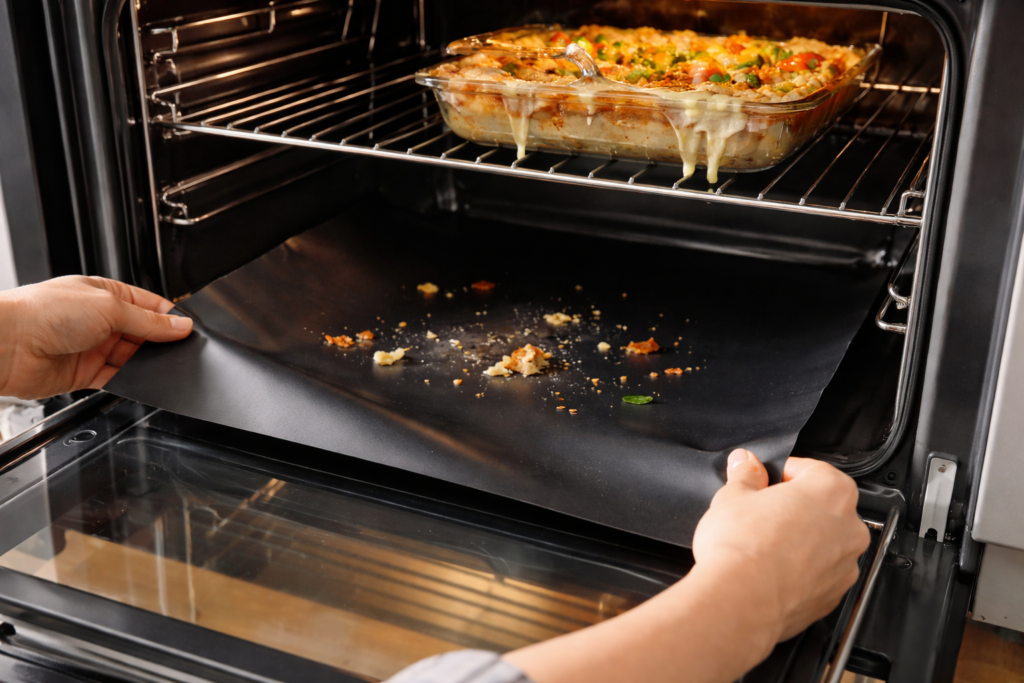
An oven liner is a heat-resistant, non-stick sheet placed inside your oven to catch food drips, grease splatter and burnt residue before they bond to the oven floor.
Most are made from PTFE (a Teflon-style material) or fibreglass-coated non-stick layers. The idea is simple — catch the mess before it burns onto the oven surface and becomes a cleaning problem.
Do Oven Liners Actually Work?
Yes — when used properly, they work very well.
The important distinction is that oven liners don’t clean your oven. They stop it getting dirty in the first place. They prevent burnt-on spills, keep the oven base clean, and reduce cleaning time significantly. What they don’t do is clean existing grime or stop grease vapour from building up on the oven walls and fan.
Think of them as prevention, not cure.
The Real Benefits of Oven Liners
Less Scrubbing, Less Effort
Instead of scraping burnt food off the oven floor, you simply remove the liner and wipe or rinse it clean. For busy households where the oven is used daily, that’s a significant time saving over the course of a year.
Protects the Oven Base
Burnt-on spills are one of the main causes of smoking ovens, lingering smells and permanent staining on the oven floor. A liner acts as a protective barrier between your food and the oven surface — and once that surface is stained or damaged, it’s very difficult to restore.
Reduces the Need for Harsh Cleaners
Because there’s less build-up, you don’t need strong caustic chemicals as often. Maintenance becomes a wipe rather than a deep clean. This ties in well with a low-effort, low-chemical cleaning routine — and it’s why professional oven cleaners often recommend liners to clients after a clean.
The Downsides (Don’t Skip This)
Incorrect Placement Can Be Dangerous
This is where people go wrong. Never place oven liners directly on the oven floor in models where this blocks vents or airflow, and never allow them to touch heating elements. Always check your oven manufacturer’s guidance before fitting a liner — some specify that liners must be placed on a lower rack rather than the oven floor.
They Don’t Stop Everything
Grease vapour still circulates inside the oven during cooking, which means the oven walls, roof and fan can still accumulate grease over time. A liner handles the base — the rest of the oven still needs occasional attention.
Cheap Liners Can Disappoint
Lower-quality liners warp under heat, lose their non-stick coating quickly, and become difficult to clean. This is the source of most negative reviews about oven liners as a category. A quality PTFE liner costs a few pounds more but lasts significantly longer and performs consistently.
How to Use Oven Liners Properly
Using an oven liner correctly takes about two minutes:
- Cut to size if necessary — most liners can be trimmed with standard scissors
- Place on a lower rack or on the oven base if your manufacturer permits it
- Keep clear of elements, fans and air vents at all times
- Clean regularly — wipe down after use or rinse under the tap; most are dishwasher safe
If you’re ever unsure about placement, put it on the lowest shelf rather than directly on the oven floor. You lose a little coverage but eliminate any risk.
Are Oven Liners Worth It?
For most households, yes — particularly if you cook regularly, want less maintenance, or are trying to move away from heavy cleaning chemicals.
They’re one of the few kitchen products that genuinely reduce future workload rather than just making a cleaning job slightly easier. At £5–£10 for a quality liner that lasts years, the value proposition is straightforward.
The Professional Perspective
From a professional cleaning standpoint, the cleanest ovens are rarely the ones cleaned most aggressively. They’re the ones that never get heavily dirty in the first place.
That’s exactly where oven liners come in. Used consistently, they prevent build-up, extend the time between deep cleans, and make every clean easier. After a professional oven clean, fitting a liner is one of the best things you can do to protect the results.
Final Verdict
Oven liners are simple but genuinely effective — one of the most practical oven maintenance products available.
They’re best suited to prevention and reducing cleaning effort in busy kitchens. They’re not a solution for an already dirty oven — if yours needs a clean, do that first, then fit a liner going forward to keep it that way.
Quick Summary
| Feature | Oven Liners |
|---|---|
| Purpose | Prevent mess and spills |
| Cleaning power | None — preventative only |
| Ease of use | Very high |
| Cost | Low to moderate (£5–£10) |
| Lifespan | 2–3 years with quality liners |
| Overall impact | High — long-term time saver |